
9 Furnace Replacement Warning Signs to Watch

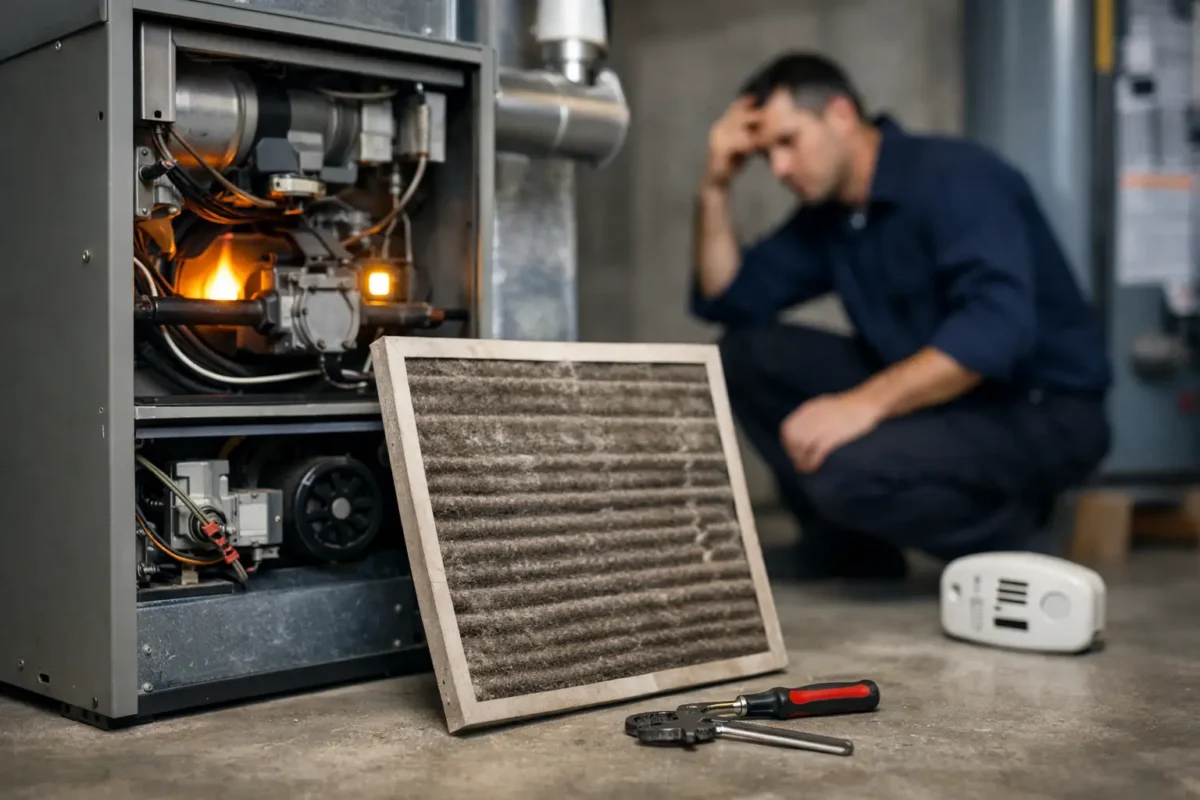
A furnace that quits on a cold Bay Area morning rarely fails without a little warning. Knowing the furnace replacement warning signs can help you plan ahead instead of making a rushed decision without heat, especially when repair appointments and replacement schedules are in high demand.
Not every furnace problem means replacement is the right answer. A newer system with a worn igniter or faulty thermostat may be an excellent repair candidate. But when age, repair frequency, comfort problems, and operating costs begin to add up, replacement can be the more dependable and cost-conscious choice.
9 Furnace Replacement Warning Signs Homeowners Should Know
1. Your furnace is 15 years old or more
Most well-maintained gas furnaces last about 15 to 20 years, though actual life expectancy depends on installation quality, maintenance history, usage, and the condition of the ductwork. A furnace nearing that range may still run, but it is more likely to develop expensive mechanical issues and operate less efficiently than current equipment.
Age alone does not require a replacement. If an older furnace is reliable, safe, and inexpensive to maintain, a repair may make sense. Still, once it reaches its later years, it is wise to start considering replacement options before a breakdown forces the timing.
2. Repairs are becoming frequent or expensive
One service call does not necessarily signal the end of a furnace. Components such as flame sensors, capacitors, thermostats, and igniters can often be replaced affordably. The concern is a pattern: repairs every winter, multiple parts failing in a short period, or a major repair bill on an aging system.
A practical rule is to compare the repair cost with the furnace’s age, condition, and expected remaining life. Putting a significant amount of money into a 17-year-old unit may provide only a temporary fix. A qualified technician can explain the condition of the equipment clearly and provide upfront pricing for both paths.
3. Heating bills keep rising without a clear reason
Utility bills can change with weather, energy rates, and household routines. But if your heating costs rise steadily while you use the furnace in the same way, the system may be losing efficiency. As internal parts wear and airflow becomes restricted, the furnace may need more energy to deliver the same level of warmth.
Poor insulation, leaking ducts, and dirty filters can also drive up costs, so the furnace should not be blamed automatically. A professional evaluation can identify whether the issue is the equipment itself, the duct system, or a combination of both.
4. Some rooms are warm while others stay cold
A comfortable home should not require sweaters in one bedroom and open windows in another. Uneven heating can come from undersized or damaged ductwork, blocked vents, thermostat placement, or an improperly sized furnace. It can also indicate that an older furnace no longer moves or produces heat effectively.
This is one area where replacement is not always the complete solution. Installing a new furnace without addressing a ductwork problem can leave the same uneven comfort behind. The best recommendation considers the entire heating system, not just the unit in the garage, attic, or closet.
5. The furnace runs constantly or short cycles
A furnace should run long enough to heat the home and then shut off normally. If it seems to run nearly nonstop, struggles to reach the thermostat setting, or turns on and off repeatedly, something is not working as it should.
Short cycling may be caused by an overheating issue, a clogged filter, a faulty thermostat, restricted airflow, or a furnace that is too large for the home. Constant operation can point to heat loss, declining capacity, or efficiency problems. Some of these issues are repairable, but persistent cycling in an older furnace deserves prompt attention.
6. You hear new or worsening noises
Furnaces make some normal sounds, including the soft rush of airflow and the click of a system starting. Loud banging, rattling, screeching, grinding, booming, or repeated popping is different. These noises can be associated with loose panels, blower motor problems, ignition issues, expanding ductwork, or worn internal components.
Do not ignore a loud boom at startup, especially if it happens repeatedly. Delayed ignition can allow gas to build briefly before lighting, creating a small but forceful ignition. A licensed HVAC technician should inspect the furnace rather than leaving this issue for the next maintenance visit.
7. Indoor air feels dustier or drier than usual
A furnace does not create dust, but a system with poor filtration, airflow problems, or leaking ducts can circulate more particles throughout the home. You may notice more dust around vents, rooms that feel stuffy, or family members experiencing increased irritation from dry air or allergens.
A filter change may solve the issue, and duct sealing or cleaning may be appropriate in some homes. If air-quality concerns occur alongside poor heating performance and an aging furnace, replacement may be part of a larger comfort improvement plan.
8. The flame is yellow instead of blue
For a gas furnace, the burner flame should generally be steady and blue. A yellow or flickering flame can indicate incomplete combustion, which needs professional evaluation. Other concerns include soot around the unit, excess moisture on windows, rust or corrosion near the furnace, or a persistent burning smell.
If you smell gas, leave the home if necessary, avoid switches and open flames, and contact your gas utility or emergency services from a safe location. If a carbon monoxide alarm sounds, get everyone outside immediately and call for help. Safety concerns should never wait for a convenient appointment.
9. Your furnace no longer supports the comfort you expect
Sometimes the clearest sign is the daily experience of living with the system. You adjust the thermostat repeatedly, wait too long for warm air, worry about every unusual sound, or hesitate to leave town during colder weather because the furnace feels unreliable.
A replacement can offer more than fewer repair calls. Properly selected modern equipment can improve temperature consistency, reduce energy use, operate more quietly, and give you greater confidence when your family needs heat. The right system depends on your home’s size, layout, insulation, ducts, and heating needs – not simply the size of the old furnace.
How to Decide Between Furnace Repair and Replacement
The decision usually comes down to three questions: Is the furnace safe? Is the repair likely to provide reliable service? Is continuing to repair it the better financial choice? A newer unit with a straightforward problem may be worth repairing. An older unit with recurring failures, declining efficiency, and a costly repair often makes replacement the smarter long-term investment.
Ask for an assessment that explains the issue in plain language, including what caused the failure, what the repair will address, and what may fail next due to the furnace’s age. You should also receive clear options and upfront pricing, not pressure to replace equipment that can still be repaired safely.
For San Jose homeowners, equipment efficiency is only one consideration. Correct sizing matters just as much. An oversized furnace can short cycle and create uneven temperatures, while an undersized unit may run too long and struggle during cold spells. A professional should evaluate the home before recommending a replacement model.
Plan Before a No-Heat Emergency
If you recognize several furnace replacement warning signs, schedule an inspection while the system is still operating. This gives you time to compare options, ask questions, and choose a solution that fits your home and budget without the stress of an unexpected outage.
HVAC DOME helps homeowners make informed heating decisions with reliable licensed technicians, tailored recommendations, and upfront pricing. Whether a repair can restore dependable heat or a replacement is the better investment, a careful evaluation can help protect the comfort and safety of your home when you need it most.