
Water Heater Choices for San Jose Homeowners

A cold shower at 6:30 a.m. changes the entire rhythm of a household. For San Jose homeowners, a dependable water heater is not a luxury – it supports busy mornings, laundry, dishwashing, and comfortable routines every day. When yours starts running short on hot water, making unfamiliar noises, or leaking onto the floor, the right response can prevent a small issue from becoming a costly emergency.
The best solution is not always the newest or largest unit. Your household size, fuel source, hot-water habits, available space, and budget all matter. A licensed technician can help you weigh those details, explain your options clearly, and provide upfront pricing before work begins.
When a Water Heater Needs Attention
Some water heater problems are obvious, such as no hot water or a visible leak. Others build gradually and are easy to overlook until the system fails. If your hot water turns rusty, the temperature swings unexpectedly, or the unit makes popping and rumbling sounds, schedule an inspection soon.
Sediment is a common issue in tank-style units. Minerals settle at the bottom of the tank over time, forcing the system to work harder and sometimes creating banging or popping noises as water heats beneath the buildup. This can reduce efficiency and shorten the equipment’s service life.
Water around the base of the unit also deserves prompt attention. It may come from a loose connection, a temperature and pressure relief valve, condensation, or corrosion inside the tank. A tank that is leaking from its body generally cannot be repaired safely and will need replacement. Waiting can lead to water damage, especially when the unit sits in a garage, closet, attic, or interior utility area.
Call for service if you notice any of these concerns:
- Hot water runs out much sooner than it used to.
- The pilot light will not stay lit, or the burner does not ignite.
- Your electric unit trips a breaker or has inconsistent heating.
- The water smells unusual, appears discolored, or contains visible particles.
- You hear loud rumbling, cracking, or hissing from the tank.
- A gas water heater produces a gas odor or shows signs of venting trouble.
If you smell gas, leave the area, avoid switches or open flames, and contact your gas utility or emergency services as appropriate. Do not attempt to diagnose a gas leak yourself.
Choosing the Right Water Heater for Your Home
Replacement is an opportunity to improve comfort and operating costs, but only if the new unit is properly matched to your home. A system that is too small can leave family members waiting for hot water. One that is oversized may cost more to buy and operate than necessary.
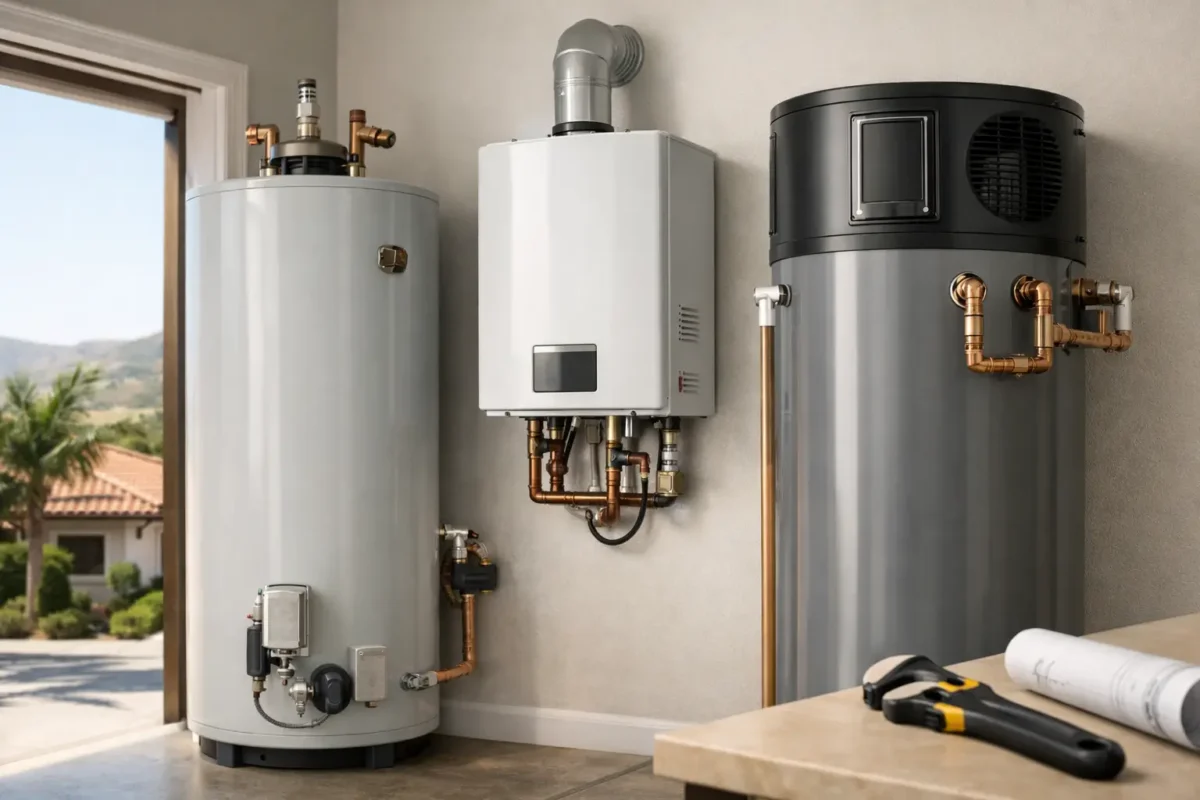
Conventional Tank Water Heaters
A conventional storage tank keeps a reserve of heated water ready for use. These units remain a practical choice for many households because they are familiar, dependable, and typically have a lower upfront installation cost than tankless models.
Tank capacity matters, but it is not the only sizing factor. A family with several back-to-back showers may need a larger tank or a unit with a stronger recovery rate. Recovery rate refers to how many gallons a unit can heat in an hour after its stored hot water is used. Two tanks with the same capacity can perform differently depending on their fuel type and efficiency.
Tankless Water Heaters
Tankless systems heat water as it flows through the unit rather than storing a full tank of hot water. Their main advantage is continuous hot water when the system is properly sized for the household’s demand. They can also save space and may reduce energy use because they do not constantly maintain a tank of heated water.
The trade-off is a higher initial investment and more demanding installation requirements. A gas tankless system may need a larger gas line, dedicated venting, electrical upgrades, or changes to plumbing. Performance also depends on incoming water temperature and how many fixtures run at the same time. A unit that handles one shower well may struggle when a shower, dishwasher, and washing machine run together.
Heat Pump Water Heaters
Heat pump water heaters move heat from surrounding air into the water rather than generating all heat directly. In the right location, they can be an energy-efficient option for Bay Area homeowners looking to reduce electricity use.
They need sufficient air space and generally work best in areas such as garages or utility rooms. They can make a low operating sound and cool the surrounding air, so placement is a real consideration. If your unit is in a small interior closet, a heat pump model may require changes that make another option more practical.
Gas or Electric: What Fits Best?
The right fuel source often depends on what your home already has. Replacing a gas unit with another gas model may be the most straightforward path, while an electric model can make sense where gas is unavailable or where a homeowner is planning broader electrification upgrades.
Do not choose based on purchase price alone. Consider installation needs, long-term utility costs, household demand, ventilation requirements, and available rebates or local incentives. A professional assessment helps prevent expensive surprises after the work begins.
Why Proper Sizing and Installation Matter
Water heater installation involves more than connecting a few pipes. Gas units require safe combustion air and correct venting. Electric units need appropriate wiring and breaker capacity. All installations must account for shutoff valves, drainage, pressure relief protection, and local permit requirements.
In California, seismic strapping is another essential safety detail. A properly secured water heater is less likely to shift or rupture during an earthquake. Drain pans and drain lines may also be needed depending on where the equipment is installed, particularly when a leak could damage finished areas below.
A quality installation protects your home and helps the system perform as intended. It also gives you an opportunity to correct older issues, such as outdated connections, weak venting, missing expansion protection, or inadequate access for future maintenance.
Repair or Replace? A Practical Decision
Many water heater repairs are worthwhile. Replacing a faulty thermostat, heating element, thermocouple, igniter, valve, or pressure relief component can restore safe and reliable operation when the tank itself is in good condition.
Replacement is usually the better value when the tank is corroded, leaking, or nearing the end of its expected lifespan. Traditional tank units commonly last around eight to 12 years, though water quality, maintenance, installation quality, and usage can change that timeline. Tankless systems may last longer with consistent professional maintenance, but they also have components that need periodic attention.
If your water heater is older and has needed repeated repairs, ask for a clear comparison of repair costs versus replacement options. The goal is not to replace equipment prematurely. It is to avoid putting significant money into a system that may fail again soon.
Simple Habits That Help Your System Last
A little attention can support better performance. Keep the area around your water heater clear so technicians can access it safely and so airflow is not blocked. Check periodically for moisture, corrosion, or unusual sounds. If you have a tank-style unit, professional flushing can help manage sediment buildup when appropriate for your system and water conditions.
Set the temperature thoughtfully. Many households use a setting around 120 degrees Fahrenheit to balance comfort, energy use, and scald prevention. Homes with specific health needs may require a different approach, so discuss temperature settings with a qualified professional rather than making assumptions.
For gas units, never store paint, gasoline, cleaners, or other flammable materials nearby. For any unit, do not ignore a temperature and pressure relief valve that is dripping or discharging. That valve is a critical safety component, and it should be evaluated by a licensed technician.
Get Clear Answers Before the Hot Water Stops
A water heater rarely fails at a convenient time. Planning ahead when you notice early warning signs gives you more choices, less stress, and a better chance to select an efficient system that fits your home. HVAC DOME provides dependable water heater service for San Jose area homeowners, with licensed technicians, responsive support, and upfront pricing focused on your comfort.
Whether you need a repair, a safety inspection, or help choosing a replacement, the best next step is a professional evaluation based on your actual household needs. Reliable hot water should feel routine again – and with the right system and proper care, it can.