
Tankless Versus Storage Water Heater: Which Fits?

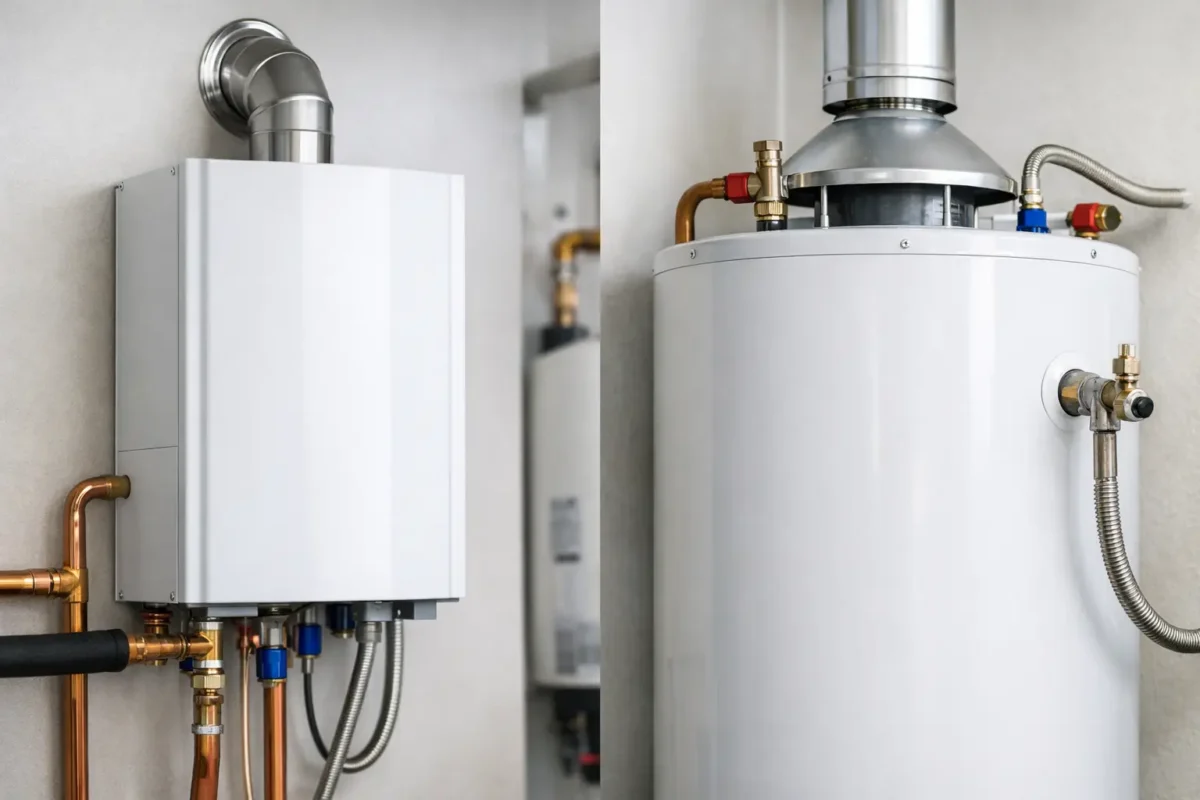
A cold shower halfway through the morning routine turns a water-heater decision into an urgent one. When comparing a tankless versus storage water heater, the better choice is not always the newest-looking unit or the one with the lowest sticker price. It is the system that can reliably match your household’s hot-water habits, available space, utility setup, and long-term budget.
For homeowners in San Jose and across the Bay Area, both options can be excellent. The right answer depends on how many people live in the home, when hot water is used, and whether the installation requires upgrades to gas, electrical, venting, or plumbing connections.
Tankless Versus Storage Water Heater: The Core Difference
A traditional storage water heater holds a set amount of hot water in an insulated tank, commonly 40 or 50 gallons in many homes. The burner or heating elements warm that stored water and cycle on as the tank loses heat. When someone opens a hot-water tap, the home draws from the supply already waiting in the tank.
A tankless water heater, also called an on-demand water heater, heats water as it flows through the unit. It does not store a reserve of hot water. Instead, sensors detect demand and activate a powerful gas burner or electric heating elements to heat the water on its way to the shower, dishwasher, or faucet.
That distinction affects nearly every part of ownership: installation cost, energy use, capacity during peak demand, maintenance, and replacement timing.
When a Storage Water Heater Makes More Sense
A storage water heater remains a practical and dependable choice for many Bay Area homes. Its main advantage is straightforward performance. A properly sized tank provides a known amount of hot water and can usually meet normal household routines without major changes to utility infrastructure.
Lower upfront replacement cost
Replacing an existing tank with a similar tank model is often less expensive than converting to tankless. The installation may be simpler because the home already has a compatible location, water connections, gas line or electrical circuit, and venting arrangement. This can matter when a failed water heater needs prompt replacement and the budget is a primary concern.
Storage units also offer familiar, easy-to-understand sizing. A technician can look at the household size, first-hour rating, and usage pattern to recommend a tank that supports regular showers, laundry, and dishwashing.
Strong performance for concentrated demand
A tank holds a limited supply, but that supply can be useful when several fixtures need hot water at almost the same time. A correctly sized 50-gallon or larger unit may serve a busy morning routine well, especially if the home has predictable use patterns.
The limitation comes after the stored supply is depleted. The household may need to wait for the tank to recover before everyone gets a fully hot shower. Recovery time varies by fuel type, tank size, and model efficiency.
Trade-offs to consider
Tank units take up more floor space and experience standby heat loss because they keep water hot even when no one is using it. They also have a finite tank life. Sediment can collect at the bottom over time, particularly in areas with mineral-heavy water, reducing efficiency and contributing to wear.
Most storage water heaters last roughly eight to 12 years, although water quality, maintenance, installation quality, and usage all matter. A leaking tank usually requires replacement rather than repair.
When Tankless Is Worth the Investment
Tankless systems appeal to homeowners who want a compact unit, high efficiency, and a longer-term approach to hot water. Because the system heats water only as needed, it can reduce energy used to maintain a tank of hot water all day and night.
Continuous hot water within the unit’s limits
The word “endless” is often used for tankless hot water, but it needs context. A tankless unit can provide hot water continuously as long as demand stays within its flow-rate capacity. It will not run out of stored hot water because there is no stored tank to empty.
However, every tankless heater has a maximum gallons-per-minute output that changes with incoming water temperature. During cooler weather, the unit must raise the water temperature more, which can reduce the flow it can deliver. If two showers, a washing machine, and a dishwasher all run at once, an undersized tankless unit may struggle to maintain the desired temperature.
Proper sizing is essential. A professional should calculate the home’s expected simultaneous demand rather than choose a model based only on the number of bathrooms.
More usable space and potentially longer service life
Tankless units are wall-mounted and much smaller than conventional tanks. For homes with tight utility closets, garages that need more usable room, or remodel plans that change mechanical-space needs, that can be a meaningful benefit.
With regular maintenance, a tankless water heater may last 15 to 20 years or longer. Many components can be serviced or replaced, which can support a longer useful life than a standard tank. That does not mean it is maintenance-free. In fact, annual flushing is particularly important where minerals can build up inside the heat exchanger.
Higher installation complexity
A tankless unit typically costs more to purchase and install. Gas models may require a larger gas line because they draw a significant amount of fuel when operating. They may also need new venting, a condensate drain for high-efficiency condensing models, and electrical power for controls and ignition.
Electric tankless models can demand substantial electrical capacity. In some homes, installation may require panel upgrades or dedicated high-amperage circuits. These infrastructure changes are why an honest quote should account for the entire installation, not only the heater itself.
Comparing Cost, Efficiency, and Daily Comfort
The best way to compare a tankless versus storage water heater is to separate upfront cost from lifetime value. A storage heater generally wins on initial price and simpler replacement. A tankless system can cost more at installation but may offer lower operating costs, added space, and a longer potential service life.
Energy savings are real but not identical in every home. A household with low or moderate hot-water use may benefit from avoiding standby losses. A large family with constant, high-demand usage may see a different savings profile, particularly if the tankless unit is not sized correctly or if gas and electricity prices shift over time.
Comfort comes down to expectations. If your family often uses multiple showers at once, a high-capacity tankless system or a properly sized storage tank can both work well. If you want a long shower after other hot-water tasks are complete, tankless can be especially appealing. If you prefer simple operation and a lower replacement cost, a quality storage unit may be the smarter fit.
Questions to Answer Before Choosing
Start with your actual household routine. Count the fixtures that may use hot water at the same time, not just the total number of bathrooms. Consider shower flow rates, laundry habits, dishwasher cycles, and whether family members regularly shower back-to-back.
Next, assess the home itself. Is there adequate gas capacity for a tankless model? Does the electrical panel have room for an electric option? Where will venting and condensate drainage go? In older San Jose homes, these details can change the project scope considerably.
It is also wise to consider water quality and maintenance expectations. Both types benefit from periodic service. Storage tanks should be inspected for signs of corrosion, checked at the temperature and pressure relief valve, and flushed when appropriate. Tankless systems need scheduled descaling or flushing to protect the heat exchanger and preserve performance.
Choosing a Water Heater With Confidence
A water heater should fit the home you have now while supporting the way your household will use it in the years ahead. HVAC DOME can assess hot-water demand, review installation requirements, explain upfront pricing, and recommend an efficient option without pushing a one-size-fits-all answer.
If your current water heater is leaking, producing rusty water, making unusual noises, or failing to keep up, do not wait for a complete breakdown. A thoughtful evaluation before the emergency gives you more control over cost, scheduling, and the comfort your family depends on every day.