
AC Maintenance Checklist for Bay Area Homes

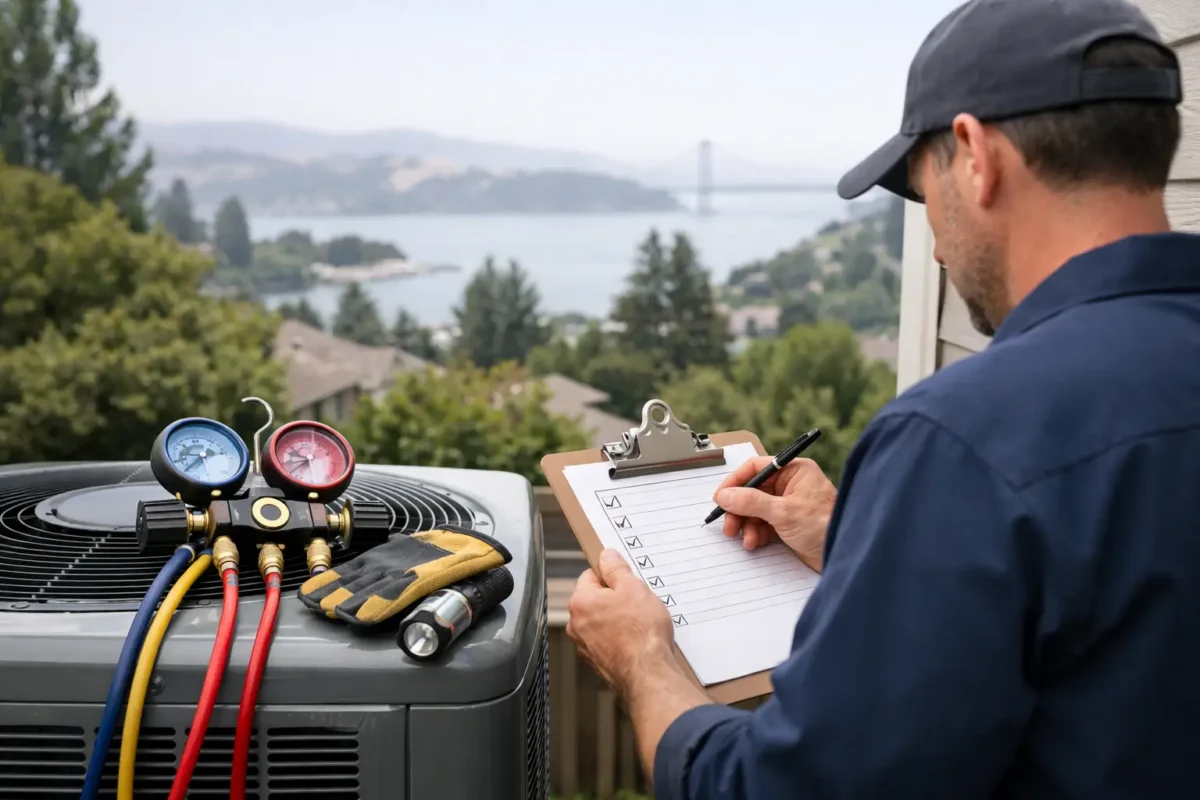
A San Jose summer can turn an upstairs bedroom, home office, or sunny living room uncomfortable quickly when an air conditioner is not keeping up. This AC maintenance checklist helps homeowners catch the small issues that often lead to higher bills, uneven cooling, and inconvenient breakdowns when the weather heats up.
A little attention goes a long way, but not every task belongs on a homeowner’s to-do list. Safe, simple upkeep can support your system between service visits. Electrical testing, refrigerant work, deep coil cleaning, and repairs should be handled by a licensed HVAC technician.
Why AC Maintenance Matters in the Bay Area
Bay Area weather is not the same in every neighborhood. A system in San Jose may run hard through a long stretch of warm afternoons, while a home in Los Gatos or Redwood City may deal with different shade, humidity, and temperature patterns. Dust, pollen, pet hair, landscaping debris, and occasional wildfire smoke can also affect airflow and indoor air quality.
When airflow is restricted or a component begins to wear down, your AC may still run, but it must work harder to cool the house. That extra strain can raise energy use and shorten the life of major equipment. Routine maintenance is not a guarantee against every repair, but it gives you a better chance to spot trouble before it becomes an after-hours emergency.
Your Homeowner AC Maintenance Checklist
Start with the items that are safe to inspect and easy to repeat. In most homes, these tasks take less than an hour and can make a meaningful difference in comfort.
Replace or inspect the air filter
A clogged filter is one of the most common causes of weak airflow. Check it monthly during periods of regular AC use, especially if you have pets, allergies, nearby construction, or windows that are often open. Replace a disposable filter when it looks visibly dirty or follow the replacement schedule printed on the filter.
Use the filter size and type recommended for your system. A very dense, high-rated filter may catch more particles, but it can also restrict airflow if the system was not designed for it. If you are unsure which filter is right for your home, ask a technician during your next maintenance visit.
Clear the area around the outdoor unit
Your outdoor condenser needs room to release heat. Remove leaves, grass clippings, loose mulch, and branches from around the unit. Keep shrubs and plants trimmed back so air can move freely through the cabinet.
Avoid stacking storage bins, patio furniture, or yard tools against the system. Do not cover the unit while it is operating. A clear space of roughly two feet around the equipment is a practical target, although the manufacturer’s requirements always take priority.
Check supply and return vents
Walk through your home and make sure supply registers and return grilles are open and unobstructed. Furniture, rugs, curtains, and toys can block airflow without anyone noticing. Rooms with poor circulation may feel warmer even when the AC is functioning normally.
Vacuum dust from accessible grilles and wipe them with a damp cloth. Do not push objects deep into duct openings or attempt to clean ducts through the vent. Ductwork can be damaged, disconnected, or contaminated if handled improperly.
Test the thermostat and cooling cycle
Set the thermostat a few degrees below the current indoor temperature and listen for the system to start. Within a short time, you should feel cool air coming from the supply vents. Check that the thermostat display is readable and that its programmed schedule still fits your household routine.
If you use a smart thermostat, review settings after vacations, power outages, or seasonal changes. Extreme temperature setbacks can save energy when nobody is home, but asking the system to recover too aggressively every day may reduce comfort. A moderate schedule is usually more practical for Bay Area households.
What to Watch for While the AC Runs
Your air conditioner communicates problems through changes in sound, airflow, and performance. Pay attention when a familiar system starts behaving differently.
Look for these warning signs:
- Air that feels warm or only mildly cool from the vents
- Weak airflow in several rooms, even with a clean filter
- New rattling, buzzing, grinding, or squealing sounds
- Water near the indoor unit or a musty odor from vents
- Short cycling, when the system turns on and off repeatedly
- A sudden increase in your utility bill without a clear reason
One warm room does not always mean the AC is failing. It may be affected by sun exposure, insulation, window coverings, or duct balance. But widespread uneven cooling, persistent noise, or water around the equipment deserves prompt professional attention.
Keep an eye on the condensate drain
Cooling your home also removes moisture from the air. That moisture exits through a condensate drain line. If the drain becomes clogged, water can back up near the indoor equipment and may trigger a safety switch that shuts the system down.
You can visually check for standing water around the indoor unit and make sure the drain outlet outside is not blocked. Skip chemical drain cleaners and avoid taking apart drain components. A technician can clear the line safely and inspect the drain pan, pump, and safety controls during seasonal service.
Tasks Best Left to a Licensed Technician
A professional AC tune-up goes beyond a quick look at the equipment. The purpose is to verify that the entire system is operating safely, efficiently, and within the manufacturer’s specifications.
During a thorough maintenance appointment, a technician may inspect electrical connections, test capacitors and controls, measure temperature performance, check the blower and indoor coil, clean the outdoor coil as needed, assess refrigerant-related performance, and inspect the condensate system. They can also identify worn parts before they fail during a heat wave.
This work matters because an AC can appear to be cooling while operating inefficiently. Low refrigerant performance, a dirty coil, a weak capacitor, or a developing electrical issue can create strain that is not obvious from the thermostat. Refrigerant should never be added as a routine maintenance step without finding and addressing the reason for a problem.
For most homes, professional maintenance once a year is a smart baseline. Scheduling in spring gives you time to address concerns before peak summer demand. Older systems, homes with heavy use, and properties with indoor air quality concerns may benefit from more frequent attention.
A Simple Seasonal Schedule
Use this AC maintenance checklist at the beginning of the cooling season, then repeat the basic checks during summer. Check filters monthly, keep the outdoor unit clear after yard work or windy weather, and pay attention to changes in cooling performance.
Schedule professional service before your system is under daily demand. If you recently moved into a home, had remodeling work completed, or cannot remember the last maintenance visit, it is wise to arrange an inspection sooner rather than later. Construction dust and long periods of deferred care can put extra stress on an HVAC system.
When to Call for AC Service
Turn the system off and request service if you smell burning, hear loud mechanical noises, see ice on refrigerant lines, or notice a breaker repeatedly tripping. These issues are not good candidates for a wait-and-see approach.
For less urgent concerns, such as reduced airflow or rooms that never seem comfortable, a diagnostic visit can provide clarity before the problem grows. HVAC DOME provides dependable, upfront service for San Jose-area homeowners who want clear answers and comfort-focused recommendations.
Your air conditioner should make summer feel easier, not add another problem to manage. Keep up with the simple checks, address unusual changes early, and give your system professional care before the hottest days ask the most from it.