
Duct Cleaning vs Duct Sealing: Which Is Right?

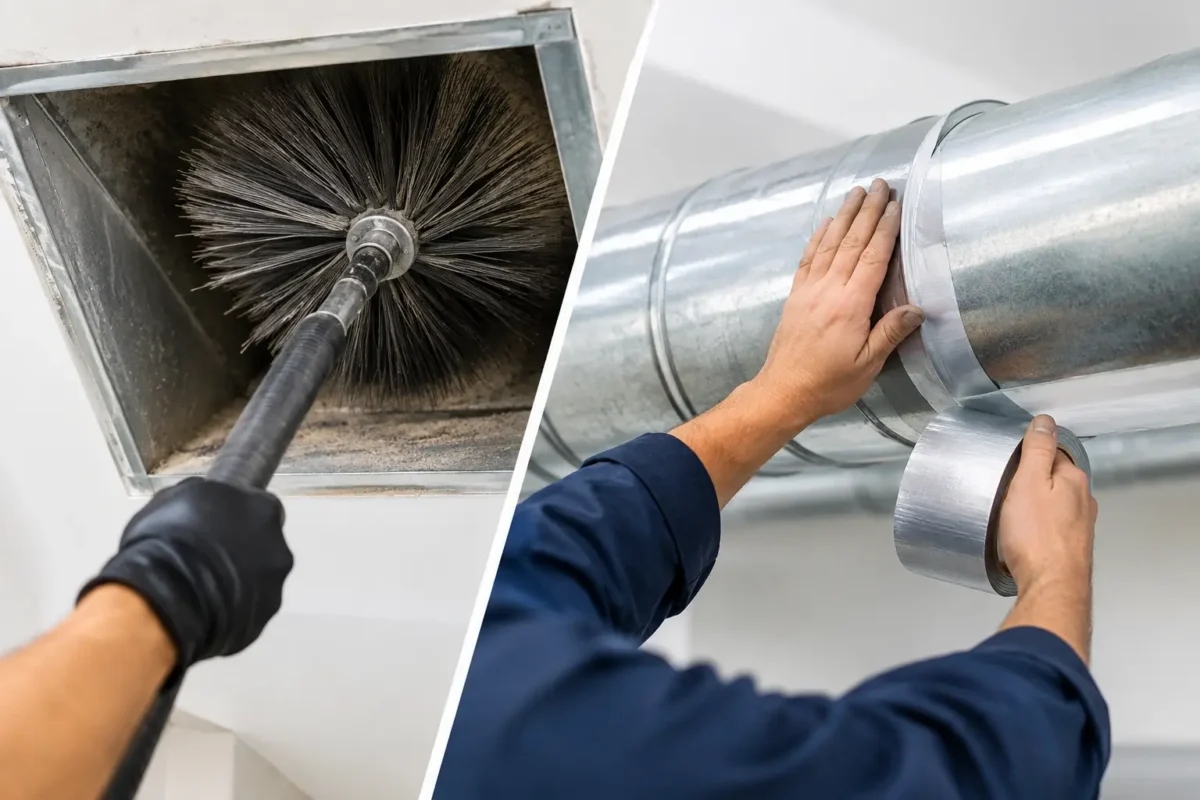
A dusty vent cover and an uneven room can both point to your ductwork, but they do not call for the same fix. In the duct cleaning vs duct sealing decision, the right service depends on what is happening inside and around the ducts: buildup, leaks, damaged connections, or a combination of issues.
For San Jose homeowners, this distinction can affect more than housekeeping. It can influence airflow, indoor comfort, HVAC operating costs, and how hard your furnace or air conditioner has to work. A professional inspection replaces guesswork with a clear, practical recommendation.
Duct Cleaning vs Duct Sealing: The Key Difference
Duct cleaning removes material from the inside of your duct system. A qualified technician uses specialized equipment to dislodge and collect dust, construction debris, pest remnants, and other contaminants that have accumulated in accessible ductwork. The goal is to improve the cleanliness of the air pathways serving your home.
Duct sealing addresses air escaping from the duct system. Over time, joints can separate, tape can fail, flexible ducts can tear, and connections at vents or equipment can loosen. Sealing closes those gaps so conditioned air is more likely to reach the rooms where you need it instead of leaking into an attic, crawl space, garage, or wall cavity.
Put simply, cleaning deals with what is inside the duct. Sealing deals with where the air is going. One service does not automatically replace the other.
When Duct Cleaning Makes Sense
Most homes do not need routine duct cleaning on a fixed annual schedule. Dust naturally collects in every home, and a little dust inside ductwork does not necessarily mean there is a serious indoor-air concern. Cleaning is most useful when there is a specific reason to believe the ducts contain substantial debris or contamination.
You may want an inspection for duct cleaning after a major remodeling project, especially if sanding, drywall work, or demolition created fine dust. It can also be a reasonable step after a pest problem has been fully resolved, when visible debris is blowing from supply vents, or when ducts have been exposed to unusual amounts of dirt.
A home with persistent dust may benefit, but the source matters. Leaky return ducts can pull dusty air from a crawl space or attic into the system. In that case, cleaning alone may provide only temporary relief because the system can continue drawing in new debris.
If you see what appears to be mold near a vent or inside ductwork, avoid treating duct cleaning as a standalone answer. Moisture is the underlying issue that needs attention first. A qualified HVAC professional can help identify whether condensation, a drainage issue, poor insulation, or another condition is contributing to the problem.
What Cleaning Can and Cannot Fix
Thorough cleaning can remove accumulated debris and help restore a cleaner air path. It may also remove obstructions that affect airflow in limited cases. However, it will not repair crushed ducts, reconnect a loose branch line, correct poor duct sizing, or stop conditioned air from leaking out of the system.
It also cannot solve every comfort complaint. If one bedroom stays warm while the rest of the house cools down, the cause could be leakage, inadequate return airflow, insulation gaps, a thermostat issue, or equipment that is not properly sized. That is why diagnosis should come before selecting a service.
When Duct Sealing Is the Better Choice
Duct sealing is often the stronger solution when your main concern is comfort or energy waste. Leaks in ducts can allow cooled air to escape during San Jose’s warm months and heated air to disappear on chilly winter mornings. The HVAC system then runs longer to meet the thermostat setting, while certain rooms may still feel uncomfortable.
Common signs of leaky ductwork include rooms that are consistently too hot or too cold, weak airflow from certain vents, unexpectedly high utility bills, excessive dust around registers, and a system that seems to run for long cycles. You may also notice musty or dusty odors when the system starts, particularly if return ducts are pulling air from an unfinished space.
Professional duct sealing may involve repairing accessible joints and connections with approved mastics or other HVAC-rated materials. Technicians also inspect for torn flexible duct, disconnected runs, poor support, and deteriorated insulation. Standard cloth-backed duct tape is not a dependable long-term repair for most duct leaks, even though its name suggests otherwise.
Why Sealing Can Improve Comfort
Your HVAC equipment can only deliver the comfort it produces if the duct system carries that air effectively. A leak near the air handler or along a major supply trunk can waste a meaningful amount of conditioned air before it reaches the living space.
Sealing is especially valuable in homes with ducts routed through attics, garages, crawl spaces, and other unconditioned areas. It can reduce energy loss and help improve room-to-room balance. Results depend on the location and severity of the leaks, the design of the system, and the overall condition of the home.
Duct leakage can also affect indoor air quality. Leaky return ducts may draw unfiltered air from areas that contain insulation fibers, dust, or other particles. Closing those leaks helps the system pull more air through its intended filter path.
Can You Need Both Services?
Yes. Some homes have ducts that are both dirty and leaky. A remodel may leave debris behind while older duct connections have also loosened. A past rodent issue may require cleaning after removal, along with repairs to the damaged duct sections. In these situations, addressing only one problem leaves the other unresolved.
The best order depends on the condition of the ductwork. If a system has significant debris and accessible leaks, cleaning may happen before final sealing so technicians can inspect and repair the system properly. If leaking return ducts are actively pulling in attic or crawl-space dust, sealing may be the immediate priority to stop the source of contamination.
The important part is avoiding a one-size-fits-all recommendation. A trustworthy contractor should explain what they found, show you accessible concerns when possible, and provide upfront pricing for the work that actually serves your home.
What a Professional Duct Inspection Should Consider
A useful duct assessment looks beyond the vents you can see. The technician should consider the condition of accessible supply and return ducts, connections near the air handler, insulation, airflow at registers, and signs of damage or disconnection.
They should also evaluate your comfort concerns in context. For example, a poorly cooled upstairs room may be caused by duct leakage, but it could also involve sun exposure, insufficient insulation, a restricted return path, or an aging air conditioner. A good recommendation accounts for the full system rather than selling a single service by default.
For homes with gas furnaces or water heaters, changes to airflow and pressure should be handled carefully. Licensed HVAC technicians can identify concerns that may affect safe equipment operation and recommend appropriate repairs.
Choosing the Right Service for Your Home
If you are seeing visible debris, dealing with the aftermath of construction or pests, or suspect contamination inside accessible ducts, ask about duct cleaning. If your priority is uneven temperatures, weak airflow, dusty attic smells, or high energy use, duct sealing may offer a more direct return.
If both descriptions sound familiar, schedule an inspection rather than choosing based on an advertisement or a low introductory price. The scope of ductwork varies widely from one Bay Area home to another, and a meaningful estimate should be based on access, system layout, repairs needed, and the condition of the ducts.
At HVAC DOME, our licensed technicians help homeowners understand what their duct system needs without pressure or confusing jargon. You deserve clear options, reliable workmanship, and a home that feels comfortable in every season.
A duct system is mostly out of sight, but it should not stay out of mind when comfort changes. Address the actual cause, and your heating and cooling system has a better chance to deliver the clean, steady airflow your household relies on.