
How Do I Know If My Air Ducts Need Replacing?

When one room in your home feels stuffy, another stays too hot, and your energy bill keeps climbing, the problem is not always the furnace or AC unit. Many homeowners ask, how do I know if my air ducts need replacing, especially when comfort problems keep coming back even after routine HVAC service. In many cases, the ductwork hidden behind walls, in the attic, or under the house is the part of the system that is quietly causing the trouble.
Ducts do a simple job, but they affect almost everything about indoor comfort. They carry heated or cooled air where it needs to go. When they are damaged, leaking, poorly sized, or simply worn out, your system has to work harder to deliver less comfort. That can show up as uneven temperatures, weak airflow, extra dust, noisy operation, and higher utility costs.
How do I know if my air ducts need replacing or just repair?
This is the right question to ask, because not every duct issue means full replacement. Some problems can be fixed with targeted repairs, sealing, or reconnecting loose sections. Other situations point to ductwork that has reached the end of its useful life or was never installed correctly to begin with.
A repair usually makes sense when the issue is limited to a small section, such as a disconnected joint, minor air leak, or damaged insulation in one area. Replacement becomes more likely when the duct system has widespread deterioration, repeated leaks, crushed runs, poor layout, or age-related wear across multiple sections.
If your home has older flexible ducts in a hot attic, or aging metal ducts with loose seams and insulation issues, it may be more cost-effective to replace larger portions of the system rather than keep patching one problem after another. For many homeowners, the tipping point is when repair costs keep adding up but comfort still does not improve.
Signs your air ducts may need replacing
The biggest warning sign is persistent uneven comfort. If certain rooms are always warmer or cooler than the rest of the house, your ducts may be leaking, undersized, or poorly routed. A healthy duct system should deliver steady airflow throughout the home, not leave you adjusting vents and thermostats room by room.
Weak airflow is another common clue. If your HVAC equipment seems to be running but the air coming from some vents feels faint, the problem may be crushed ductwork, heavy leakage, or sections that have come apart. In homes around San Jose and nearby communities, attic duct issues are especially common because heat exposure over time can wear down materials and connections.
Higher energy bills can also point to failing ductwork. When conditioned air escapes before it reaches your living spaces, your heating and cooling system has to run longer to keep up. You pay for air that never fully makes it into the rooms you use.
Excess dust is worth paying attention to as well. Leaky ducts can pull in dust, insulation particles, and attic debris, then circulate them through the home. If you feel like you are cleaning more often but your indoor air still feels dusty, the duct system may be part of the issue.
Noise can tell you a lot too. Rattling, whistling, or booming sounds from the ductwork may mean loose connections, pressure problems, or sections that are deteriorating. Some duct noise can be corrected, but persistent noise paired with comfort problems often suggests a larger design or condition issue.
Then there is age. Ductwork does not last forever. While lifespan depends on material, installation quality, and attic or crawlspace conditions, many systems begin showing meaningful wear after 15 to 25 years. If your ducts are in that range and you are dealing with repeated comfort complaints, replacement may be the smarter long-term move.
Visible damage matters more than most homeowners think
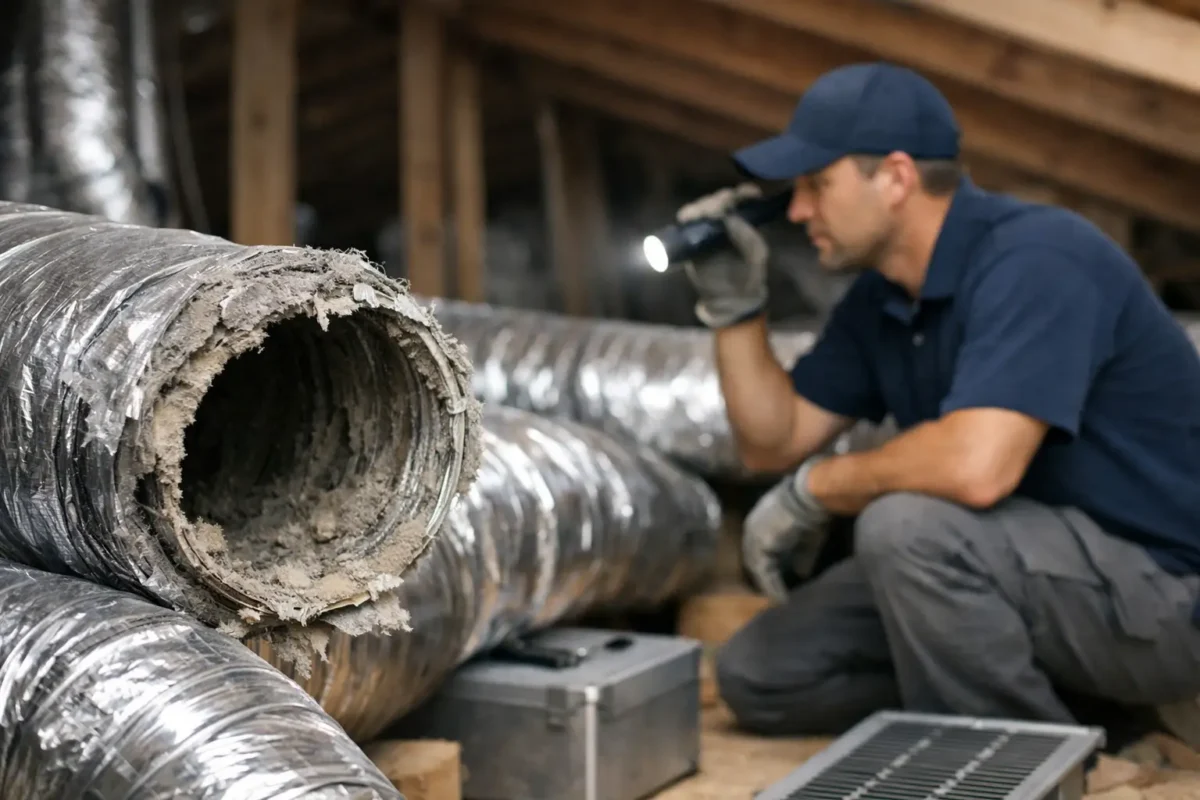
If you can safely see any part of your duct system in the attic, garage, basement, or crawlspace, take note of what it looks like. Tears in flexible duct material, sagging sections, disconnected joints, rust, dented metal, or missing insulation are all signs the system may not be performing as it should.
A little damage does not always mean a full replacement is necessary. But visible problems in multiple places usually mean the hidden sections are not in great shape either. Ducts tend to age as a system, not just one isolated spot at a time.
When replacement is usually the better investment
There are times when replacing ducts is not just about fixing damage. It is about correcting an old system that was never delivering comfort efficiently in the first place.
If you have completed HVAC repairs before but still have hot and cold spots, the duct layout itself may be wrong for your home. If your AC or furnace was replaced but the ductwork was left undersized or poorly designed, the newer equipment may never perform at its best. In that case, replacing the ducts can help the entire system operate more effectively.
Replacement also makes sense when there is widespread air leakage. Sealing one section may help, but if the network has leaks throughout, those fixes can turn into a temporary bandage. Starting fresh with properly sized, sealed, and insulated ducts often delivers a noticeable difference in comfort and efficiency.
Homes with very old duct materials, contamination concerns, or major physical deterioration should also be evaluated carefully. Once the duct structure is compromised, cleaning and patching will not restore proper performance.
Repair versus replacement depends on cost and results
Here is the practical way to think about it. If a repair is affordable and likely to solve the problem, it is worth considering. If the repair is one more step in a pattern of ongoing issues, or if it addresses only part of the problem, replacement may save money and frustration over time.
The goal is not just to get the system running today. It is to restore reliable airflow, improve comfort, and avoid wasting money on energy loss month after month.
What happens if you wait too long?
Delaying duct replacement can make your HVAC system work harder than it should. That extra strain can affect major components over time, including your blower and overall system performance. Even if your heating or cooling equipment is still in decent condition, bad ducts can shorten its effective life by forcing it to run longer and more often.
Waiting can also keep indoor comfort stuck in a cycle of frustration. You may continue paying for repairs, adjusting vents, or trying to solve the problem with thermostat changes, when the real issue is the air distribution system itself.
For families, working professionals, and property owners, that usually shows up in everyday ways. Bedrooms that never cool down. A living room that feels drafty. Utility bills that creep up without a clear reason. These are not small inconveniences when they affect your comfort every day.
How a professional inspection answers the question clearly
If you are still wondering, how do I know if my air ducts need replacing, the most reliable answer comes from a professional duct inspection. A licensed HVAC technician can evaluate airflow, inspect accessible duct runs, look for leaks or damage, and determine whether your issues are isolated or system-wide.
This matters because duct problems can be misleading. Weak airflow in one room could be a disconnected branch line, or it could be part of a larger sizing problem. High energy bills could come from equipment inefficiency, duct leakage, or both. A proper inspection helps separate guesswork from facts.
A good evaluation should also include honest guidance about trade-offs. Sometimes repair is the right call. Sometimes partial replacement makes more sense than replacing everything. And sometimes full duct replacement is the most cost-effective path because it solves multiple comfort and efficiency problems at once.
For homeowners who want dependable comfort, this is where working with a local, licensed team matters. HVAC DOME approaches these issues with upfront recommendations and a focus on what will actually improve your home, not just what sounds like the biggest project.
Should you replace ducts when replacing your HVAC system?
Not always, but it is often worth evaluating at the same time. New heating and cooling equipment can only perform as well as the duct system supporting it. If the ducts are leaking, undersized, aging, or poorly designed, your new system may struggle to deliver the comfort and efficiency you expect.
That does not mean every equipment upgrade requires new ducts. But if your current ductwork is already showing signs of failure, combining the projects can be more practical and less disruptive than replacing the equipment now and the ducts later.
The right decision depends on the condition of the ducts, the age of the home, your comfort goals, and how long you plan to stay in the property. A careful inspection can tell you whether your ductwork is still supporting your HVAC system properly or holding it back.
If your home never seems to feel quite right, trust that instinct. Air ducts are out of sight, but they should not be out of mind. The right fix can make your home quieter, cleaner, more comfortable, and less expensive to heat and cool.